Nailing Your Go-See: How to Impress Model Agencies

Reading time: 8 minutes
You've received an invitation to a go-see from a model agency and now your heart is pounding? A go-see is your chance to show in person what you're made of, beyond photos and online applications. Most models underestimate how much is decided at this in-person meeting. Agencies like Model Management Hamburg or Place Models invite several applicants every day, but only a fraction truly impress. In this article you'll learn how to prepare for your first model agency meeting, which mistakes to avoid and how to score points in the conversation.
What exactly is a go-see at a model agency? The term comes from English and literally means "go and be seen." Unlike a classic casting, which is about a specific job, the go-see is an introductory meeting between you and the agency. The bookers want to see whether you fit the agency's roster, how you move, how photogenic you look in person and whether the chemistry is right. According to a 2024 survey by the German model agency platform Modelwerk.de, an average go-see lasts only 10 to 15 minutes, in which you have to make the maximum impression.
Proper Preparation Starts Days in Advance
How do I prepare for a go-see? The answer lies in structured planning. At least three days before the appointment, you should start checking your materials and planning your appearance. Your comp card must be up to date, meaning photos no older than six months. If you're unsure which shots really belong, this guide on comp card pictures and the shots you really need will help. Print at least five to seven comp cards, professionally on matte or satin-matte photo paper, A5 format (about 5.8 x 8.3 inches). Agencies like Izaio Model Management in Munich expect you to bring physical cards, not just PDFs on your phone.
Write down the exact address and the name of your contact in advance, and research the agency thoroughly. Check on the website which models are already under contract, which clients the agency serves and whether it specializes in commercial, fashion or editorial. This information shows in the conversation that you're seriously interested. According to a report in the magazine "Model Management" (2025), 40 percent of applicants stand out negatively because they don't even know what kind of jobs the agency stands for.
What Should I Wear to the Go-See?
The question of clothing is crucial and is often answered wrongly. Agencies want to see your natural figure and proportions, not a fashion show. The rule: simple, form-fitting, but not provocative. Women do well in tight black jeans or leggings paired with a simple white or black T-shirt. Men choose dark jeans and a plain T-shirt or tank top that shows the shoulders. Avoid loose cuts, print shirts with large logos, eye-catching patterns or layered looks.
For shoes: flat sneakers or ballet flats for women, sneakers for men. High heels are not customary at go-sees unless the agency explicitly requests them. Your hair should be styled but not overdone. Women are best off wearing their hair down or in a simple ponytail, men well-groomed with a recognizable haircut. Keep makeup minimal: a little concealer, mascara, a touch of lip gloss. Bookers want to see your real face, not an Instagram mask. A 2024 study by the Federal Association of German Model Agencies (BVDM) shows that 67 percent of agencies rate applicants wearing too much makeup as unprofessional.
Which Documents and Measurements Should You Bring?
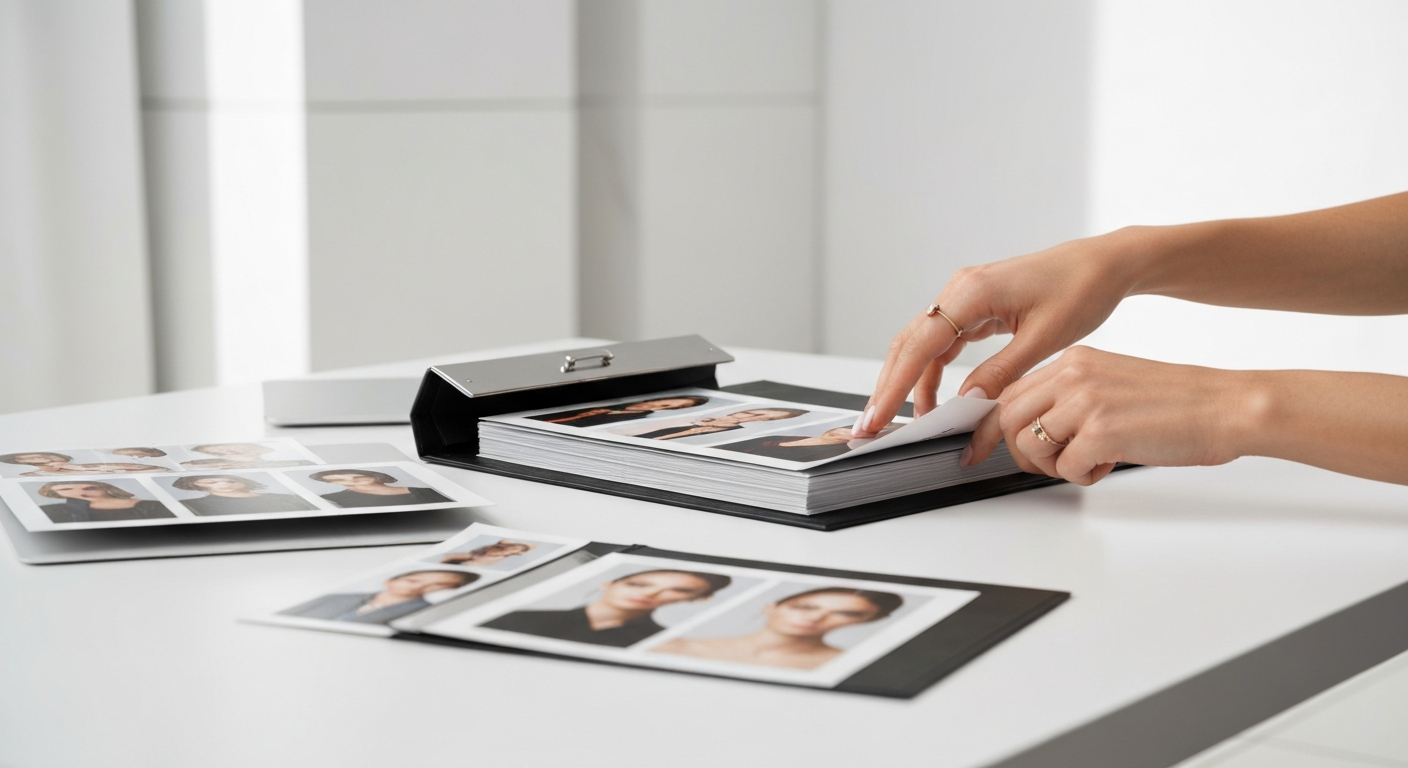
Besides your comp card, you need a list of your current measurements: height in centimeters, clothing size, waist circumference, hip circumference, bust circumference (for women), inseam, shoe size. Measure everything again the day before, no estimates. Agencies work with these numbers every day and notice immediately when something is off. If you already have experience, bring a list of your previous jobs or clients, even if they were only TFP shoots or local fashion shows. Every reference counts.
If you're a minor, a legal guardian has to come along or you need a signed consent form. Many agencies, including Louisa Models in Munich, require this for legal reasons at the very first go-see. Also pack a small notebook and a pen to take notes or write down contact details. That comes across as professional and interested.
The Process: What Really Happens at the Go-See?
You arrive at the agency, check in at reception and are led to the bookers' office. Usually one or two people sit across from you, sometimes the boss in person. The booker will ask you to walk a few steps, turn around, and possibly take Polaroids of you (front, profile, back). These pictures are for the internal files, not for publication. Questions follow about your motivation, previous experience, availability and goals. Be honest, but not insecure. If you haven't done any jobs yet, say so openly instead of exaggerating.
Agencies value authenticity. According to an internal study by the agency Cocaine Models (2025), the three most important factors in the decision are: appearance (35 percent), personality and presence (40 percent), reliability and professionalism (25 percent). Your photos got you here, but now what counts is how you come across. If you want to learn more about appearing confident without arrogance, read this article on casting body language and confident presence.
Go-See Mistakes Models Should Avoid
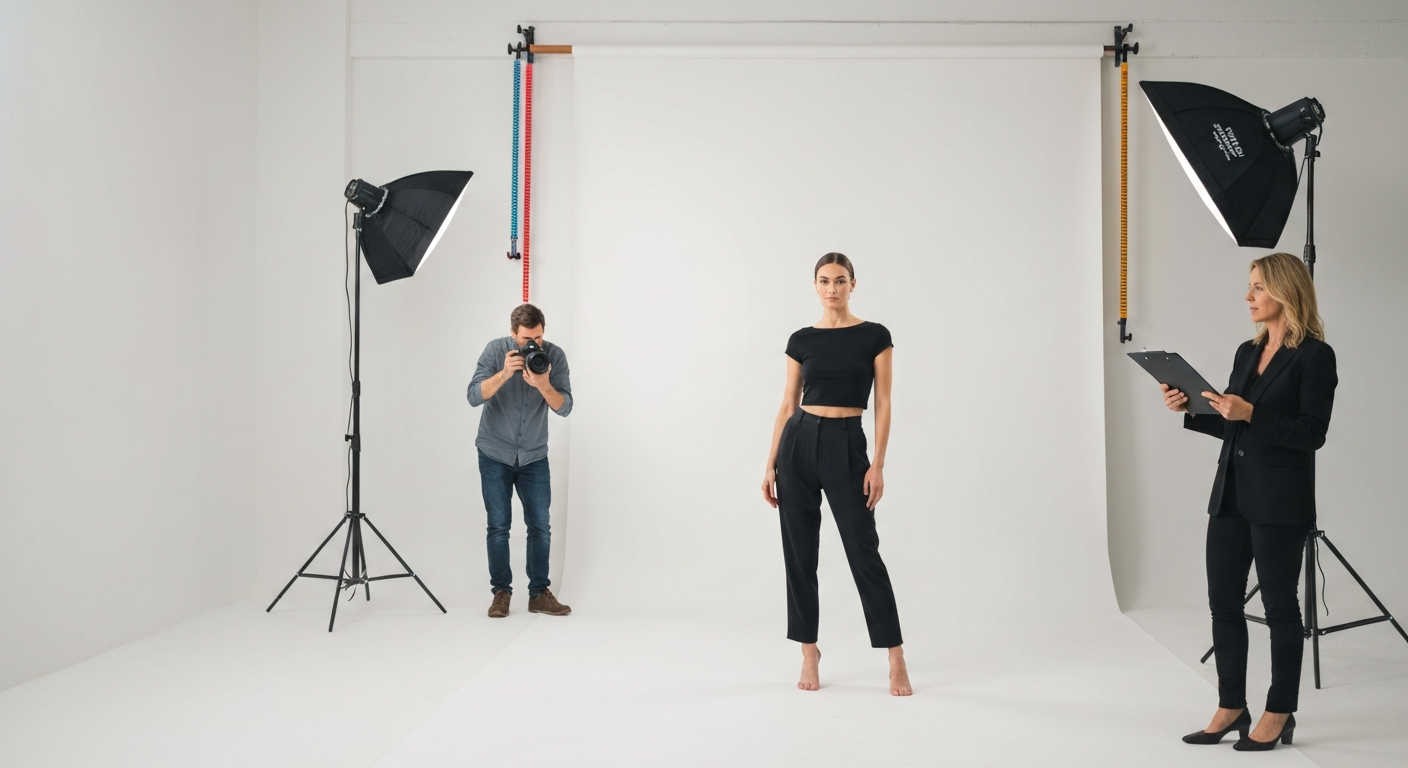
Arriving late is the most common and most serious mistake. Allow at least 15 minutes of buffer, especially in big cities like Berlin or Hamburg, where traffic is unpredictable. It's better to arrive ten minutes early and wait outside than to be even two minutes late. More no-gos:
- Bringing companions who are not expressly permitted (boyfriend, girlfriend, parents for adult models)
- Staring at your phone while you wait or during the conversation
- Negative comments about other agencies, photographers or past experiences
- Lying about age, measurements or availability
- Showing insecurity by constantly apologizing or putting down your own photos
Agencies like Seeds Management in Hamburg report that about 30 percent of go-sees fail because models get in their own way, not because of a lack of suitability. If you have a bad feeling after the meeting, analyze honestly what caused it. Was it nerves? Lack of preparation? Or is the agency simply not a good fit for you?
After the Go-See: How Do You Handle the Answer?
Most agencies give you initial feedback right at the meeting or tell you when to expect an answer. One to three business days is typical. If you haven't heard anything after a week, you may politely follow up by email. Keep it short, thank them for the conversation and ask whether a decision has been made. Following up more than once comes across as unprofessional.
If the agency shows interest, it will offer you a contract. Before you sign, read it thoroughly or have someone with experience check it. Many newcomers sign hastily and regret it later. Our guide to reviewing a model contract helps you understand the key points. Pay particular attention to exclusivity, term, commissions and notice periods.
If you get a rejection, don't take it personally. Agencies often have very specific requirements or their roster is already full in your type. According to Modelwerk.de, about 70 percent of all go-sees end in a rejection, even for talented applicants. Politely ask for feedback; many bookers give you constructive pointers you can work on. Use the experience as practice for the next appointment.
Should I attend several go-sees at the same time?
Yes, absolutely. It's completely normal and even recommended to introduce yourself to several agencies as long as you don't yet have a signed exclusive contract. Many models visit five to ten agencies in the first weeks of their careers to find out who fits best. Just be careful with scheduling overlaps and don't plan go-sees too close together. Stress and rushing show.
What if I'm photographed at the go-see?
Polaroids or digital snapshots are standard and are used only for internal documentation. The agency may not publish these images or pass them on to third parties without your consent. If professional test shoots are offered during the go-see, for payment, be careful. Reputable agencies don't charge you money for tests or comp cards. If they do, research the agency carefully; it could be a shady business model. You can find an overview of reputable German agencies at the Federal Association of German Model Agencies (www.bvdm-online.de).
How important is my portfolio at the first agency meeting?
Very important, but not everything. Your portfolio shows what you can already do and how photogenic you are. For newcomers without much experience, bookers look more at potential, presence and measurements. If you're unsure which images really belong in your portfolio, take a look at the article on portfolio selection. Quality beats quantity: better five strong images than 20 mediocre ones.
Can I also do a go-see online?
Since 2020, many agencies also offer virtual go-sees via video call, especially for applicants from other cities or countries. The process is similar: you present yourself in front of the camera, turn around, answer questions. Make sure you have good light (daylight from the front), a neutral background and a stable internet connection. Dress just as you would for an in-person appointment. The downside: agencies can judge your proportions and presence less well. If possible, always prefer the in-person meeting.
What happens if several agencies offer me a contract?
Congratulations, then you have a tough choice. Compare the offers carefully: who has the better clients? What commission do they charge? What is the support like? Be open with the agencies that you have several offers; reputable bookers respect that. Choose the agency where you have the best gut feeling and that best fits your goals. If you're torn between a mother agent contract and a pure placement contract, learn about the differences beforehand. Many newcomers start without exclusivity at first in order to stay flexible.
Conclusion: Preparation and Authenticity Beat Perfection
A go-see at a model agency isn't rocket science, but it demands preparation, punctuality and the ability to be yourself. Agencies don't want perfect robots but people with potential who are reliable and can work professionally. Prepare your materials, choose simple clothing, be on time and show genuine interest. If you follow these basic rules, you're already ahead of half the competition. And even if it doesn't work out the first time: every go-see is practice that makes you stronger for the next one. Get out there, show yourself and let the agencies decide who fits them. You have nothing to lose, but a career to gain.