Packing Your Model Bag: The Essentials You Need
Reading time: 10 minutes
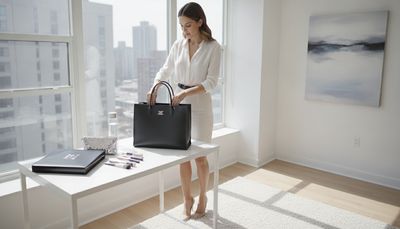
A go-see in 30 minutes, then straight to a test shoot, and that evening a flight to Milan. If you realize in that moment that your spare tights are missing, your concealer is almost empty or you packed the wrong shoes, it gets stressful. Packing the right model bag isn't a matter of luck or last-minute scrambling, but a skill you can develop systematically. With the right checklist you save time and nerves and avoid embarrassing situations on set.
Models at agencies like PARS Management or Izaio Model Management report that a well-packed bag can make the difference between a successful go-see and a botched first impression. Preparation doesn't start the evening before the job, but with a well-thought-out system you can adapt for every assignment. In this article you'll learn which shoot gear and model equipment really belong in your bag and what you absolutely should have with you for go-sees and jobs abroad.
The Basics: What Belongs in Every Model Bag
Your standard gear should always be within reach, whether you're heading to a spontaneous casting or a booked shoot. A good travel bag for models holds about 30 to 40 liters and can be used as carry-on luggage on a plane as well as carried comfortably around the city. Brands like Herschel, Fjällräven or even Nike's duffel models have proven themselves because they are light, sturdy and clearly organized.
The basic kit includes two to three neutral outfits: well-fitting jeans in dark blue or black, a white T-shirt without a print, a black top and a simple blouse or shirt. These basics combine quickly and show your natural silhouette without distracting from what matters. Add black high heels (at least 3 inches / 8 cm heel), flat sneakers and possibly nude-colored pumps. According to a 2023 survey by the German modeling agency Cocaine Models, shoes are the most common reason for delays at go-sees, because models bring the wrong pairs or forget them.
For underwear: neutral beige or black, seamless, no lace. Several spares are a must. Add tights in different skin tones, at least three pairs, because runs always happen at the worst moment. These basics should be organized in separate packing cubes or fabric pouches so you can find everything quickly even in a rush.
Beauty and Grooming Essentials: Your Emergency Kit for Models at Shoots
On set, you're expected to arrive with well-kept skin, clean hair and neutral make-up. Still, you need a compact beauty kit for touch-ups and emergencies. A small makeup bag (roughly 6 x 8 inches at most) should contain: concealer in your exact skin tone, translucent powder, mascara, lip balm and a neutral lipstick or gloss. Add a small stash of hair ties, hairpins in your hair color and a mini dry shampoo.
According to a 2022 study by the German Cosmetic and Perfumery Industry Association (VKE), 87 percent of professional models use travel sizes of care products on the road to save weight. Invest in 3.4 oz (100 ml) bottles of your standard skincare: cleansing gel, moisturizer, sunscreen with SPF 30 or 50. Especially on jobs abroad, where you don't know whether you can buy your favorite products on site, these grooming essentials for models are worth their weight in gold in your suitcase.
An often underestimated detail: deodorant without aluminum salts and a perfume that isn't too intrusive. On set, people often work very closely together, and strong scents can be disruptive. Eye drops for dry eyes (especially during long shoots under constant lighting) and a small first-aid kit with bandages, blister plasters and painkillers shouldn't be missing either.
Hair Care and Styling on the Go
A small comb or paddle brush, a mini flat iron (if you normally use one) and travel-size hairspray round out your beauty equipment. At go-sees, your hair is often expected to be loose, straight and well-groomed. If you're heading to a shoot where specific hairstyles are required, clarify beforehand whether the hairstylist will be on site or whether you have to do it yourself. In the latter case, you should pack the appropriate tools such as a curling iron or styling products.
Clothing and Shoes for Modeling Jobs: What Is Really Necessary
The question of which clothing and shoes to pack for modeling jobs can't be answered across the board. It depends heavily on the type of job. For a go-see, the basic kit described above is enough. For booked shoots, you usually get a briefing or an email with requirements beforehand. Even so, you should always have backup options with you.
A classic example: you're booked for a fashion shoot where the clothing is provided. Even so, you bring your own neutral bodysuits, shapewear and various bra styles (strapless, clear, push-up), because not every production thinks of everything. Models on platforms like Model Management report that spontaneous outfit changes happen on set in roughly 40 percent of cases.
For jobs abroad, a different logic applies. Here you pack for several days or weeks and have to consider the climate at your destination. A packing list for a two-week job in New York in winter looks completely different from one for shoots in Ibiza in summer. What matters is that in both cases you favor layering: several thin pieces rather than one thick one, so you can react flexibly to temperature changes. You'll find more on preparing for international assignments in our article on international modeling jobs and the right travel preparation.
Documents, Tech and Organization: The Digital Emergency Kit
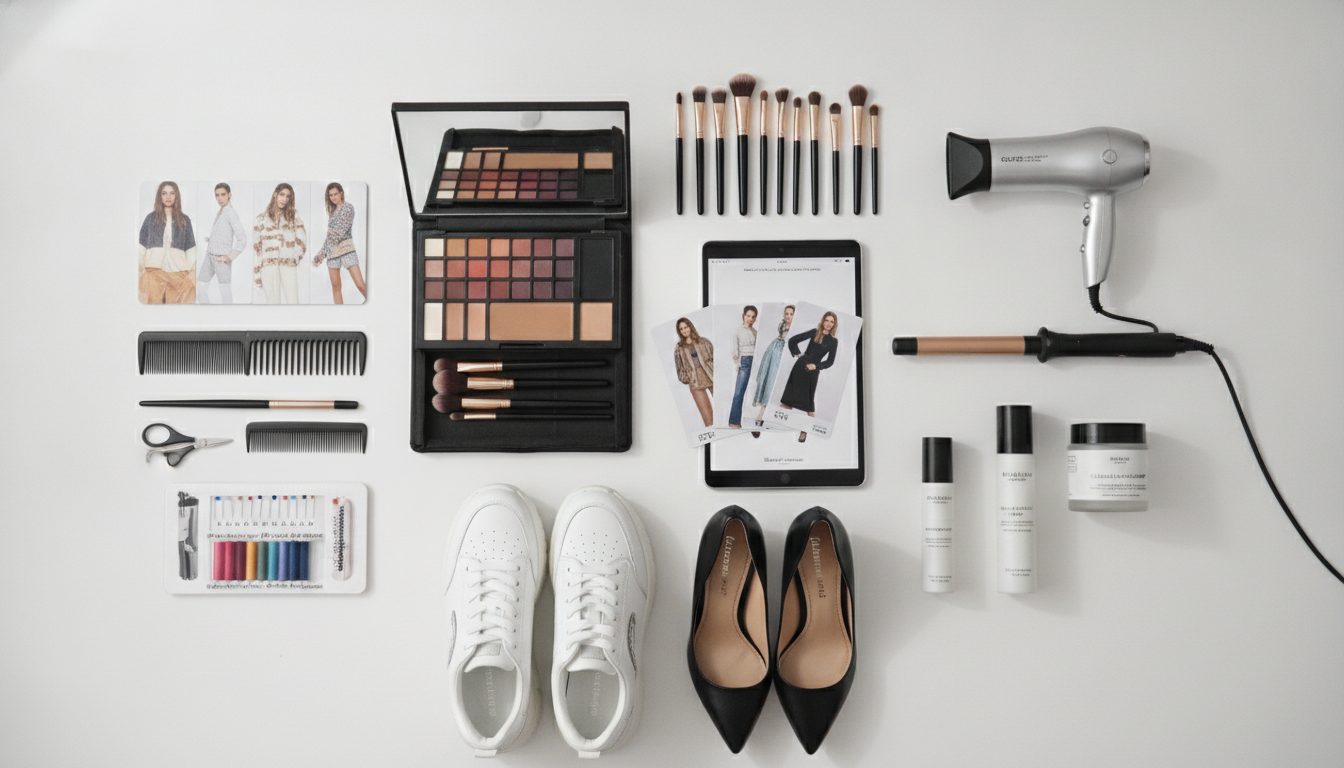
In addition to physical items, important documents and technical aids belong in your bag. A checklist for go-see preparation always includes: ID or passport, printed comp cards (at least five copies), composite cards, and possibly your portfolio in a protective folder. Even though a lot runs digitally, some agencies and clients still ask for physical documents.
On your smartphone you should have digital copies of all important documents saved: proof of insurance, agency contract, flight tickets, hotel bookings. Apps like Dropbox, Google Drive or specialized model management apps like StarNow help you organize everything in one place. Also bring a small notebook and a pen to jot down contact details, appointments or spontaneous changes when your phone happens to be dead.
Tech also includes charging cables, a power bank with at least 10,000 mAh capacity and possibly an adapter for international outlets. Especially on jobs abroad in the US, UK or Asia, this is essential. A 2023 Statista study shows that 62 percent of travelers in Europe run into technical problems due to incompatible plugs at least once a year. As a model, you can't afford that if you want to show up on time and professionally.
Emergency Kit: The Lifesavers in the Model Bag
Even the best planning can't prevent every surprise. That's why a small emergency kit belongs in every professional travel bag for models. It includes: safety pins in various sizes, double-sided tape (fashion tape), a sewing kit with black and white thread, a lint roller, a stain remover pen and baby powder (helps against sand on your feet or for quick hair cleaning).
Snacks are part of this kit too. Nuts, protein bars or dried fruit keep your blood sugar stable if a shoot drags on and no catering is arranged. A refillable water bottle saves money and keeps you hydrated. According to the German Nutrition Society (DGE), adults should drink at least 1.5 liters (about 50 oz) of water per day, more with physical exertion. As a model you're often under hot lights or in dry air conditioning for hours, so plan generously.
One last tip: keep a small flashlight, or your phone's flashlight function, within reach. In dressing rooms or backstage areas at fashion shows the lighting is often poor, and you need to find something quickly.
Packing for Jobs Abroad: The Extended Checklist
On a job abroad, the requirements change significantly. The packing list for a job abroad builds on the basics but expands them with longer-term needs. In addition to the clothing items already mentioned, you need enough underwear for the entire trip plus extras, possibly travel-size laundry detergent for hand washing, and several pairs of socks.
Depending on the destination, specific items are added: swimwear for tropical shoots, warm layers for wintry locations, special shoes like hiking boots or sandals. Find out about local conditions in advance. A job in Dubai requires different clothing (conservative in public) than a job in Los Angeles. For time differences and jet lag management we have a separate guide: Mastering time zone changes on modeling jobs worldwide.
Medication also belongs on the extended packing list. Not only your personal regular medications, but also a travel pharmacy with painkillers, anti-diarrhea medication, antihistamines and possibly sleep aids for long flights (after consulting a doctor). In some countries, certain active ingredients aren't freely available or cost more than in Germany.
Insurance and Legal Protection
Before every job abroad, check whether your health insurance applies in the destination country. For non-EU countries you often need additional international health insurance. Depending on the provider, this costs between $10 and $35 per year and covers emergencies. Liability insurance also makes sense in case you accidentally damage expensive clothing or equipment. Documents for these belong in your document folder.
Organizing Your Bag: System Instead of Chaos

Even the perfect packing list is useless if you can't find anything in your bag. Use packing cubes or zip pouches to create categories: one cube for underwear, one for tops, one for beauty, one for shoes. Clear pouches have the advantage that you can see at a glance what's inside.
Heavy items like shoes go at the bottom, delicate ones like make-up or tech go on top. Use empty spaces: socks fit well inside shoes, small items in the corners. A well-organized bag saves not just space but also time when searching.
Create a digital checklist on your phone (e.g., with apps like Todoist or Google Keep) that you can tick off before every job. That way you forget nothing and can keep optimizing the list. After each assignment, review what you really needed and what was superfluous.
Frequently Asked Questions: Packing Your Model Bag
What belongs in the model bag for go-sees?
For go-sees you need neutral clothing (jeans, white T-shirt, black top), black high heels, flat shoes, seamless underwear in skin tones, tights, your comp card, ID, a small beauty kit with concealer and lip balm, plus water and a snack. Everything should be stowed in a well-organized bag so you can react quickly. You'll find more tips in our article on mastering go-sees and impressing agencies.
What equipment do models need when traveling?
When traveling, you extend the basics with laundry detergent, several outfits for different occasions, a travel adapter, power bank, medication, insurance documents, possibly a small flat iron and enough grooming products. Depending on the destination, climate adjustments are added: sun protection and light clothing for warm regions, layers and warm shoes for cold destinations. Good advance planning is crucial.
What's the best way to organize my model bag?
Use packing cubes or zip pouches to create categories and keep heavy items at the bottom and delicate ones on top. A digital checklist on your phone helps you forget nothing. After each job, you review what you really needed and optimize your list. Over time, you develop a system perfectly tailored to you.
How many pairs of shoes should I bring to a shoot?
At least three pairs: black high heels, neutral flat shoes (sneakers or ballet flats) and possibly nude pumps. For special shoots such as sports or outdoor, matching styles are added. Shoes should always be clean, well kept and free of visible wear. A pair of flip-flops for breaks or changing is also handy.
What skincare should I bring on the road?
Your standard care routine in travel sizes: cleansing gel, moisturizer, sunscreen with at least SPF 30, possibly serum and eye cream. Add a lip balm and hand cream. Watch the 3.4 oz (100 ml) limit on flights and decant your products into clear, sealable containers. That way you're prepared at any time and your skin stays cared for.
Conclusion: Preparation Creates Professionalism
Packing your model bag isn't a gamble, but a learnable system. With a well-thought-out checklist, quality basics and good organization, you're equipped for any situation, whether a spontaneous go-see, a booked shoot or a multi-week job abroad. Invest time in preparation and continuously adapt your packing list to your experience. That not only saves stress, but also shows that you work professionally and pay attention to detail. Agencies, photographers and clients notice that, and it increases your chances of repeat bookings. Start your personal packing list today and take the first step toward more efficiency in everyday modeling life.