Comp Card Photos: The Shots You Really Need

Reading time: 8 minutes
Agencies like Modelwerk in Hamburg or Place Models in Berlin sort through hundreds of comp cards every day. The most common reason for rejection: missing or wrong comp card photos. While many newcomers apply with 15 party snapshots, their portfolio goes straight into the trash. A professional comp card needs between 6 and 12 strong images that show your versatility without being overloaded.
The difference between a booked model and a rejected applicant isn't perfect beauty, but the right photo selection. Which comp card shots do agencies really expect? And which outfits guarantee you the widest range of possible jobs?
The Headshot: Your Most Important Comp Card Photo
The headshot comes first on every comp card and decides within 3 seconds whether there's interest or rejection. Agencies want to see your face, not an artistic production. A professional headshot shows you from the shoulders up, with a neutral expression and a clear gaze into the camera. According to the 2023 industry survey by the German Model and Talent Association, 89% of agencies rate makeup-free or minimally made-up headshots as the most important selection criterion.
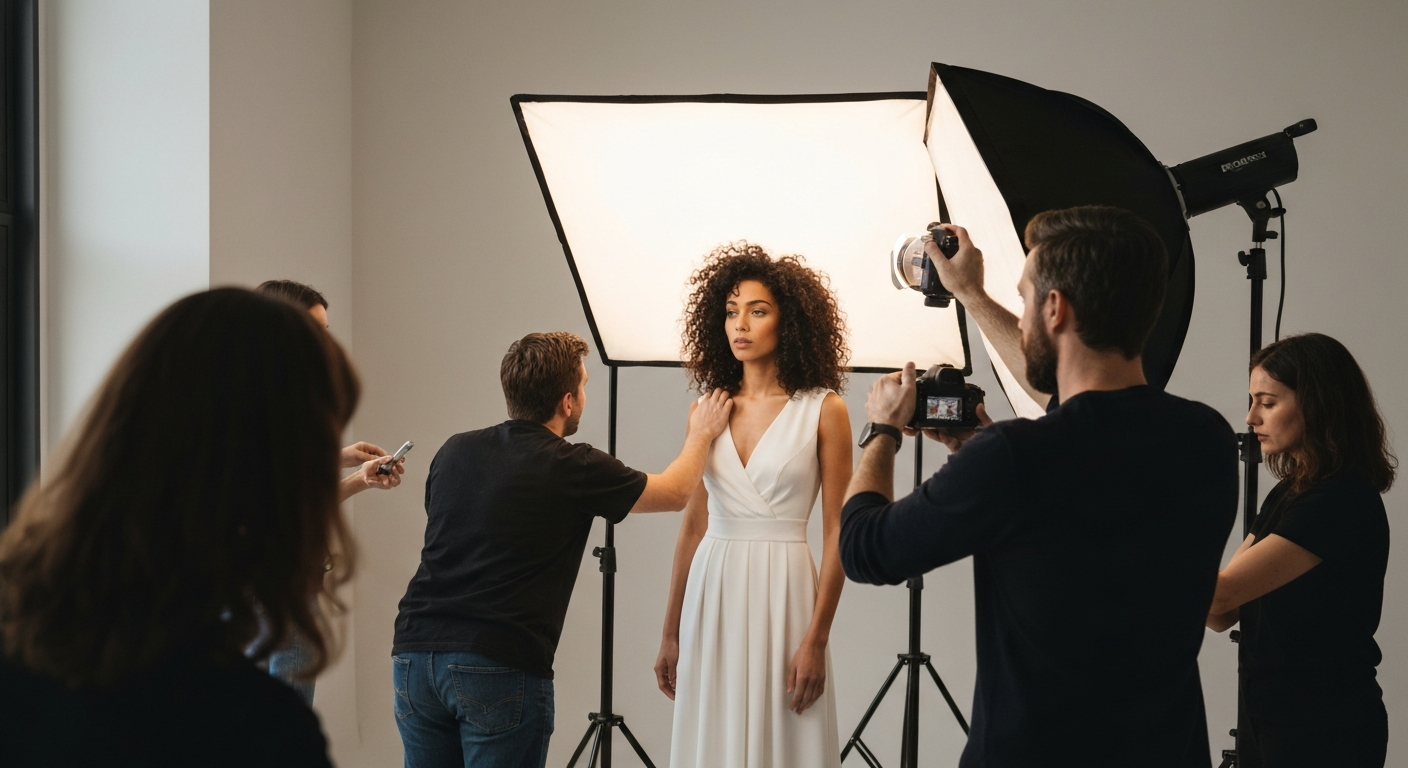
Technical requirements: daylight or professional softbox lighting, a neutral gray or white background, hair pulled back or falling loosely without covering your face. Avoid filters, heavy makeup or eye-catching accessories. The headshot should show how you arrive at a casting in the morning, not how you look after 2 hours of styling.
Full-Body Shot: Show Your Proportions Honestly
The full-body shot is one of the must-have images on every comp card. It documents your proportions, height and posture without tricks. Photographers should shoot from an elevated position looking slightly down to avoid distortion. Agencies like Cocaine Models in Düsseldorf reject applicants whose comp card photos look manipulated by unflattering angles or wide-angle lenses.
Outfit for the full-body shot: black or dark jeans, a black tank top or fitted T-shirt, flat shoes or sneakers. No high heels, no loose dresses, no props. The background stays neutral. If you're applying as a newcomer model, this honest presentation is especially important, since agencies want to assess your potential for development.
These Comp Card Shots Belong in Your Portfolio
A complete comp card for commercial models contains 8 to 10 different shots. More dilutes your profile, fewer looks unprofessional. Every image has to serve a clear function and demonstrate your suitability for different job categories.
- Close-up headshot (makeup-free, natural light)
- Full body from the front (black basics, neutral background)
- Profile shot (shows facial structure and posture)
- Beauty shot (subtle makeup, polished appearance)
- Casual lifestyle (jeans and tee, authentic situation)
- Business/formal (blazer or elegant outfit)
- Active shot (sports, movement, dynamism)
- Fashion editorial (if you already have professional shoots)
Comp Card Outfits: What Do I Wear?
The right comp card outfits determine which jobs you're even considered for. Agencies don't book models on beauty alone, but on versatility and usability. According to a 2024 analysis by Modelscout24, 67% of all successful comp cards contained at least one business outfit and one athletic outfit.
Basics for your comp card: a well-fitting pair of dark jeans, a white T-shirt, a black tank top, a classic blazer in black or gray, a simple black dress, sneakers and classic pumps. Avoid conspicuous logos, loud colors or trend pieces that will look outdated in two years. Your comp card should stay current for at least 2 years.
Color Choice and Styling Details
Neutral colors dominate professional comp cards: black, white, gray, beige, navy. These tones don't distract from the face and are easier to present digitally in different contexts. If you add color accents, do so deliberately in a single outfit, such as a red blazer or a blue shirt.
Hair and makeup vary by shot. For the main headshot the rule is: minimal or none. For beauty shots, professional makeup may emphasize your features, but never distort them. According to the German Association of Makeup Artists (Bundesverband deutscher Visagisten), models should plan for a maximum of 30 minutes of makeup time for comp card shoots; anything beyond that looks overstyled.
How Many Photos Belong on a Comp Card?
The optimal number is between 6 and 12 images. Fewer than 6 looks unprofessional and patchy, more than 12 overloads your presentation. In its model application guidelines, Elite Model Management recommends exactly 8 to 10 images for newcomers and up to 12 for experienced models with editorial credits.
Every image must add value. Avoid similar poses or outfits. If you're torn between two similar shots, choose the one with better image quality and a more natural expression. Agencies scan comp cards in under 60 seconds, and every superfluous image costs attention.
Comp Card Layout: In What Order?
The comp card layout follows a clear hierarchy. Position one always goes to the strongest headshot, because it decides the first impression. Position two shows the full-body shot. After that, different looks and styles alternate to avoid visual monotony.
Proven order: headshot, full body from the front, beauty shot, casual lifestyle, profile, business outfit, active shot, fashion editorial (if available), close-up with emotion, final full-body shot in a different outfit. This structure leads the viewer through different facets of your ability to perform in front of the camera.
Digital vs. Printed Comp Card
In 2024, according to Statista Germany, 94% of all German model agencies primarily use digital comp cards for internal management. Printed comp cards are only used at castings or client presentations. Digital comp cards have different requirements: images must also look convincing on smartphone displays, and load times must not exceed 2 seconds.
Technical standards for digital comp card photos: JPEG format, at least 1200 pixels on the long edge, a maximum file size of 500 KB, sRGB color space. Agencies like PARS Management provide clear upload guidelines that you should follow exactly.
What Must Be on a Model Comp Card?
Besides the images, every professional comp card contains your basic data: first name, age, height in centimeters, clothing size, shoe size, hair color, eye color. For female models also: bust-waist-hips in centimeters. This information must be exact, because clients book based on these criteria.
Optional details: special skills (foreign languages, sports, dancing, musical instruments), place of residence, agency affiliation, credits from relevant campaigns or editorials. Avoid your home address or private phone number on printed comp cards; the agency's contact details are perfectly sufficient.
Common Mistakes When Creating a Comp Card
The biggest mistake: too many different photographers with different image styles. A consistent comp card looks more professional than a patchwork of 5 different shoots over 3 years. If you work with different photographers, make sure the lighting and editing stay similar.
Other common mistakes: outdated images (older than 2 years), too much retouching, unprofessional backgrounds (living room, garden), poor image quality, too much skin without an artistic context, party photos or selfies. Agencies spot these no-gos immediately and filter out such applications. You'll find information on dealing with photographers properly in our guide to professional behavior on set.
How to Find the Right Photographer for Your Comp Card

Professional comp card shoots cost between $165 and $880, depending on region and the photographer's experience. TFP shoots (time for print) are an option for newcomers, but carry quality risks. Check the photographer's portfolio carefully: has he or she already created comp cards for models? Do they know what agencies require?
Reputable comp card photographers deliver 8 to 12 edited images in print quality, all usage rights included. Contracts should state in writing how many images you receive, in what format and with which rights. Avoid photographers who only work in exchange for a model fee or who make shady demands.
DIY Comp Card: Is It Even Possible?
In 2024, smartphone cameras already reach 50 megapixel resolution, which is technically sufficient for comp card photos. Still, most DIY attempts fail because of lighting, background and composition. If you shoot yourself or have someone shoot for you, invest in a professional ring light (from $85), a foldable gray backdrop (from $45) and a tripod (from $35).
More important than equipment: an honest self-assessment. If your self-made images don't come close to professional comp cards, it's better to invest in an experienced photographer. A mediocre comp card prevents jobs, and so does a missing comp card.
When Should I Update My Comp Card?
You need new comp card photos every 2 years at the latest, and sooner if you change visibly. Weight fluctuations over 11 pounds, a new hair color, a clearly different hairstyle or aging make updates necessary. Agencies expect you to look exactly like your comp card when you show up to a casting.
Even without visual changes, a refresh is worthwhile after 18 to 24 months. Photo styles change, and what looked modern in 2022 may look dated by 2024. Watch the comp cards of successful models in your category and adapt your visual language accordingly.
Frequently Asked Questions About Comp Card Photos
How many images do I need at minimum for my comp card?
A professional comp card should have at least 6 images: a headshot, a full-body shot, a profile shot and three different looks or styles. Ideal are 8 to 10 shots that show your versatility without overloading it. More than 12 images dilute your profile and make it harder for agencies to assess you quickly.
Which outfits do I need for a comp card shoot?
Bring at least 5 outfits: black jeans with a black tank top for full-body shots, a white T-shirt for casual looks, a blazer for business shots, a simple dress or elegant outfit, and sportswear for active shots. Avoid conspicuous logos, loud colors or trendy pieces. Neutral tones like black, white, gray and beige keep your comp card current for longer.
What does a professional comp card shoot cost?
Professional comp card shoots cost between $165 and $880. In big cities like Munich or Hamburg prices are at the upper end, in smaller cities cheaper. TFP shoots are a free alternative for newcomers, but with a quality risk. Make sure all usage rights are included in the price and that you receive at least 8 edited images in print quality.
Do I have to wear makeup in comp card photos?
For the main headshot and the full-body shot, the rule is: no or only minimal makeup. Agencies want to see your real face to assess your potential. For beauty shots and fashion shots, professional makeup may emphasize your features, but never distort them. According to industry standard, makeup for comp card shoots should take no more than 30 minutes.
How often do I have to update my comp card?
You should renew your comp card photos every 2 years at the latest, and sooner if you change visibly. Weight fluctuations over 11 pounds, a new hair color or a clearly changed hairstyle require immediate updates. Agencies expect the same appearance at the casting as on your comp card. Even without visual changes, a refresh is worthwhile after 18 to 24 months, since photo styles and trends change.
Conclusion: Quality Over Quantity for Comp Card Photos
A convincing comp card doesn't need 20 images, but 8 to 10 well-thought-out shots that honestly show your versatility. Invest in professional comp card photos instead of quantity, because every single photo decides your chances of being booked. The headshot and full-body shot form the foundation, while different comp card outfits and shots demonstrate your range.
Start with the basics: a makeup-free headshot, an honest full-body shot in black basics, three to four different looks from casual to business. Expand your comp card step by step with professional shoots once you've collected your first jobs and credits. And don't forget: your comp card is your most important tool in the modeling business. Treat it accordingly.