Beating Jet Lag: Staying Fit on Modeling Jobs Worldwide
Reading time: 11 minutes
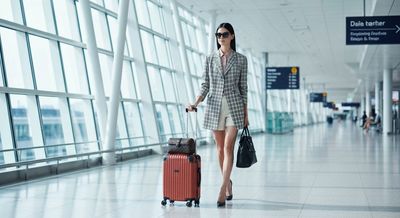
You land after a 12-hour flight from Los Angeles to Tokyo, you have a shoot for a Japanese cosmetics brand in 6 hours, and your body is screaming for sleep. Your eyes burn, your skin looks tired, and in front of the camera you still have to look fresh and full of energy. Time zone changes on modeling jobs confront many models with exactly this challenge, because international bookings often mean extreme jet lag with zero room for downtime.
While local jobs let you go home after the shoot, on jobs abroad you're often on duty right after arrival. According to a 2023 study by the German Sleep Society (DGSM), the body needs about one day of adjustment per time zone. On a flight to Asia with a 7-8 time zone difference, you would theoretically need a week to be fully acclimatized. The reality looks different: the shoot often starts 24 hours after departure.
Why Jet Lag Hits Models Harder Than Other Travelers
As a model, you're not just a traveler; you're a worker whose appearance is the product. Jet lag shows immediately in your face: puffy eyelids, dull skin, a missing glow. A 2024 survey by Model Management Hamburg of 150 active models found that 78 percent need at least two days after long-haul flights to be camera-ready again. The problem: you usually don't have those two days.
Then there's the pressure. A business traveler might be able to postpone a meeting, but with you, a whole team is standing by: photographer, stylist, makeup artist, client. According to industry estimates, production costs for a one-day fashion shoot in metropolises like New York or Shanghai run between $16,000 and $32,000. Nobody will postpone the shoot because you're tired.
Strategies Before the Flight: Preparation Is Everything
Professional models with regular jobs abroad swear by pre-flight strategies. Start adjusting your sleep schedule three days before departure. If you're flying east, go to bed an hour earlier each evening. For westbound flights, shift your bedtime later. It sounds trivial, but it makes a measurable difference.
Avoid alcohol and heavy food for 24 hours before the flight. Alcohol dehydrates you on top of the already dry cabin air, and greasy food sits heavily in your stomach, which makes sleeping on the plane harder. Instead: drink plenty of water, at least 2.5 liters (about 85 oz) a day, and eat light, protein-rich meals.
If possible, book night flights for eastbound trips and daytime flights for westbound ones. That way you can sleep on the plane when your body wants to anyway, and arrive better rested. Airlines like Lufthansa often offer premium economy fares on long-haul routes for about $650 more, which pay off through better sleeping conditions. If the agency or client books the flights, actively ask for an upgrade and explain why you need it for job performance.
During the Flight: Optimizing Sleep on Modeling Jobs Worldwide
The flight itself is your first chance to manage the time difference on shoots abroad. Set your watch to the destination time right after boarding. Your brain starts to adjust subconsciously. If it's night at your destination, try to sleep even if your body is awake. If it's daytime there, stay awake.
Invest in good sleep aids: noise-cancelling headphones like the Sony WH-1000XM5 (about $400) or Bose QuietComfort 45 (about $330) block out cabin noise effectively. A high-quality sleep mask, ideally silk, blocks out light and is gentle on the delicate eye area. Melatonin spray, available without a prescription in Germany at doses up to 1 mg, can help you fall asleep. But definitely test it at home before your first assignment, since some people react to it with tiredness the next day.
Drink a glass of water every 1-2 hours. According to the German Federal Aviation Office (Luftfahrt-Bundesamt), the humidity on airplanes is only 10-20 percent, while 40-60 percent is normal. This extreme dryness draws moisture from your skin and intensifies jet lag symptoms. Avoid caffeine from 6 hours before your planned bedtime at the destination, and avoid alcohol entirely. The supposedly relaxing drink massively disrupts your sleep quality.
After Landing: The First 24 Hours Decide
Now it gets serious. You've landed, and the clock is ticking toward the shoot. The most important rule is: adapt to local time immediately, no matter how you feel. If you land in the morning, don't go to the hotel bed, as tempting as it is. A nap of 20 minutes at most is allowed, no more. Longer sleep throws your rhythm completely off.
Go outside instead. Daylight is the strongest time cue for your body. According to a 2023 study by Northwestern University, just one hour of morning daylight shifts the internal clock by an average of 3 hours. Take a 30-minute walk, sit in a café by the window, but avoid intense workouts that stress your body even more.
Stay awake until at least 9 p.m. local time. That's hard, especially after eastbound flights, but essential. Plan light activities: shopping for last-minute items, comp card updates, or meeting up with other models. Many agencies organize meet-and-greets on arrival day; use them as a way to stay awake.
Nutrition Against Jet Lag: What Really Helps Models
Eating at the right time speeds up adjustment enormously. Your digestive system is a powerful pacemaker. Eat your first meal at the destination at local breakfast time, even if you're not hungry. That signals to your body: the day has begun.
Go for protein-rich meals during the day (eggs, fish, lean meat, tofu), since protein promotes the production of dopamine and norepinephrine, which keep you alert. In the evening, on the other hand, eat carb-rich food (whole-grain pasta, rice, sweet potatoes), since it boosts serotonin production and makes you sleepy. Avoid heavy, greasy dishes that overwhelm your already stressed digestive system.
Caffeine is allowed, but strategically. Drink coffee or green tea only in the first half of the day at your destination and not after 2 p.m. The half-life of caffeine is 5-6 hours. An espresso at 3 p.m. is therefore still working until 9 p.m. and sabotages your sleep.
Staying Fit Despite Time Zone Changes as a Model: Preparing for the Shoot
The shoot day is getting closer. You have 12-18 hours until call time. Now every minute of sleep counts. Make your hotel room completely dark. Ask the front desk for blackout curtains or bring clips to hold regular curtains shut. Even small light sources like the LED displays of air conditioners should be taped over.
Use a sleep app like Sleep Cycle or Calm that tracks your sleep cycle and wakes you in a light sleep phase. That prevents that wrecked feeling of waking up in the middle of deep sleep. But also set a classic alarm clock; technology can fail.
Allow extra time on the morning of the shoot. Your morning routine now takes longer because you have to conceal traces of jet lag. Cold spoons on the eyes (5 minutes in the fridge), eye pads with caffeine or hyaluronic acid, and facial rollers help against puffiness. Right after waking up, drink 500 ml (about 17 oz) of water with a pinch of salt; it makes up for the fluid loss overnight.
How Models Deal with Jet Lag: Pro Tips from the Industry
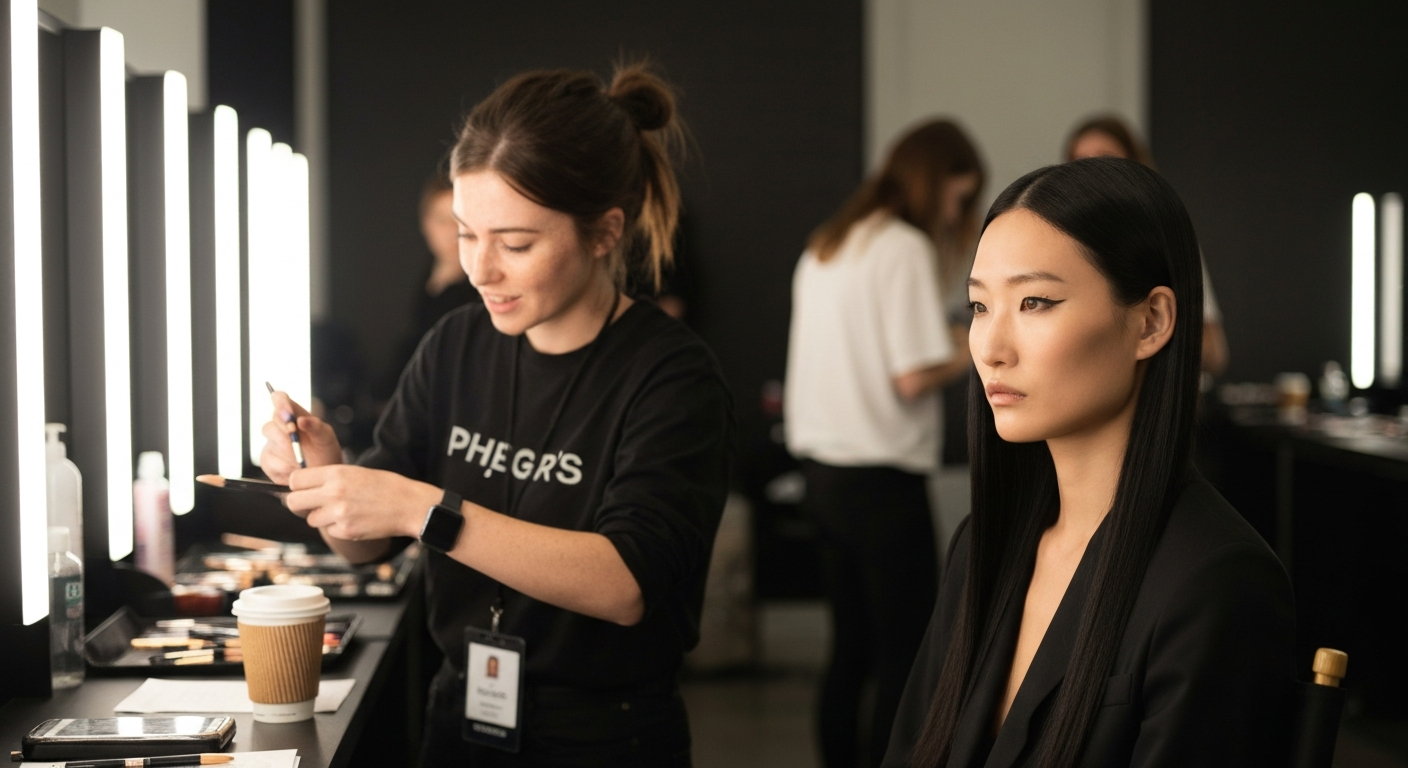
Talk openly with the makeup artist on set about your jet lag. Pros know the problem and have tricks: special primers that wake up tired skin, concealers with reflective particles, highlighting techniques for a fresher look. Don't hide it out of false shame; you'll only make it worse.
Use breaks effectively. Don't lie down; it only makes you more tired. Instead, step out for some fresh air, do light stretches, or have an espresso. Keep moving. Standing or sitting still tempts you to doze off.
For multi-day productions with time differences, calculate your travel budget realistically. Extra hotel nights before the shoot, higher-quality flights with sleeping options, and supplements can quickly cost an extra $325-$550. Clarify in advance with the agency what is covered. You'll find more in our guide to travel budgeting as a model.
Long-Term Adjustment: Multiple Jobs in Different Time Zones
Some modeling weeks are brutal: shoot in London on Monday, casting in Dubai on Wednesday, job in Los Angeles on Friday. Three different time zones in five days. Only one thing helps here: if possible, stick to a single time zone as a reference, usually your home time, and adjust only your bedtimes, not your entire rhythm.
That means: sleep whenever possible, no matter the time of day. Power naps of exactly 20 minutes (set an alarm) can be a lifesaver. Not longer, or you'll fall into deep sleep phases and wake up completely wrecked. Caffeine 15 minutes before the nap also helps you wake up refreshed, since it starts to kick in right then.
Communicate your limits. If an agency plans three continents in four days, say politely but firmly that this affects your performance. Professional agencies understand that. Disreputable ones don't, and you should avoid them anyway. How to spot them is described in our article on international modeling jobs and proper travel preparation.
Supplements and Aids: What Really Works
The market for anti-jet-lag products is huge, much of it a waste of money. What has real evidence? Melatonin at a low dose (0.5-1 mg) about 30 minutes before the desired bedtime at the destination can help you fall asleep faster. Higher doses don't bring more effect, just more side effects.
Vitamin B12 and magnesium support energy metabolism and can reduce tiredness. The German Nutrition Society recommends 4 µg of B12 and 300-400 mg of magnesium daily. Many models are undersupplied because of one-sided diets. A blood test at your family doctor will give you clarity.
Adaptogenic plants like Rhodiola rosea or ashwagandha are said to reduce stress and ease adjustment. The evidence is thin, but many models swear by them. Never try such remedies for the first time before an important job; test them weeks earlier at home.
Avoid sleeping pills. They suppress natural sleep architecture, and you often wake up groggy. Combined with jet lag, that's fatal. If you believe you can't sleep without them, talk to a doctor who knows travel medicine.
What to Do When Nothing Helps: Damage Control on Set
Despite all the preparation, sometimes jet lag hits you hard. You feel miserable, look like it, and the shoot can't be postponed. Now it's about damage control and professionalism.
Inform the team early. Tell the photographer honestly how you're doing when you arrive. Most are understanding and adjust the schedule: more breaks, simpler poses first, demanding shots once you're warmed up. Staying silent and pushing through only leads to bad pictures and possibly a blackout.
Ask for help. The makeup artist can work wonders if they know what the problem is. The stylist can choose outfits that draw attention away from your face if the puffiness won't go down. The team is on your side; use their expertise.
Focus on what you can control: posture, expression, professionalism. Even when you feel terrible, you can still hold a good pose. How to follow directions correctly despite exhaustion is explained in our guide to pose communication on set.
What to Do with Frequent Long-Haul Flights: Long-Term Health
Models with constant jobs abroad, for example at fashion weeks (Milan, Paris, New York, Tokyo, each 1-2 weeks apart), put their bodies under extreme stress. Chronic jet lag is real and, according to a 2022 University of California study, can lead to long-term consequences: a weakened immune system, digestive problems, an increased risk of burnout.
Actively plan recovery phases. After a three-week tour through Asia, you need at least one week at home without jobs to recover fully. Negotiate this with your agency, and turn down a job if necessary. Your health is your capital.
Have your blood work checked regularly: vitamin D (often deficient due to little daylight), iron (important for energy), thyroid levels (stress can affect them). Many health insurers cover an annual check-up.
Frequently Asked Questions About Time Zones on Modeling Jobs
How long before a shoot should I arrive when there's a time difference?
Ideally 2-3 days before the job, to give your body time to adjust. For time zone differences of up to 3 hours, 24 hours is enough. From a 6-hour difference, plan at least 48 hours. If the client doesn't allow that, clarify in advance that you may need some run-up time and discuss contingency plans in case of strong jet lag symptoms.
Which supplements really help against jet lag?
Melatonin at a low dose (0.5-1 mg) about 30 minutes before your target bedtime is the best-supported scientifically. Vitamin B12 and magnesium support your energy balance. Omega-3 fatty acids can reduce inflammatory reactions caused by stress. Avoid overpriced jet lag pill blends with no proven effect. As a general rule: supplements never replace enough sleep, water and healthy food.
Can I get around the time difference with sleep aids?
No, prescription sleep aids like benzodiazepines suppress natural sleep phases and often make jet lag symptoms worse. You do sleep, but not restfully. The next day you're groggy and less capable. Herbal remedies like valerian have only a weak effect. The only exception is melatonin, which supports your natural sleep-wake rhythm instead of suppressing it.
What do I do if I still fall asleep or collapse on set?
Communicate immediately when you notice it's getting critical. Ask for a 10-minute break, get some fresh air, move around, drink cold water. Caffeine only kicks in after 20-30 minutes, so factor that in. If you really can't go on, tell the producer. An honest conversation is better than a collapse in front of the camera. Most teams have contingency plans and can rearrange or postpone the shoot. Your health comes first, always.
How do top models deal with constant long-haul flights?
Professional models with years of experience have often developed fixed routines: consistent sleep hygiene, personal sleep kits (mask, earplugs, neck pillow), set supplements, and above all strict limits on which jobs they accept. Many work with sports physicians or sleep coaches. They invest in pricier flights with better sleeping options and negotiate longer travel times. The difference between a newcomer and a pro often lies not in talent but in how professionally they handle the physical demands of the job.
Conclusion: Jet Lag Comes with the Job, Preparation Makes the Difference
Time zone changes on modeling jobs are a reality, not an exception. Every international shoot brings this challenge. The difference between models who perform anyway and those who fail lies in preparation. Start adjusting three days before departure, use the flight strategically, adapt to the destination time immediately after landing, and communicate openly with the team.
Invest in the right tools: good sleep aids, quality flights when possible, supplements that work. Get to know your body, and test strategies on less important jobs before applying them to the big campaign. And most importantly: set limits. Your long-term health is more important than a single job.
The next booking to Tokyo, New York or Sydney is already waiting. With the right strategies you'll master the time difference and deliver on set, no matter which continent you're on. Your body will thank you, and so will your career.