Exposure Time in a Shoot: Freezing Motion or Letting It Flow
Reading time: 10 minutes
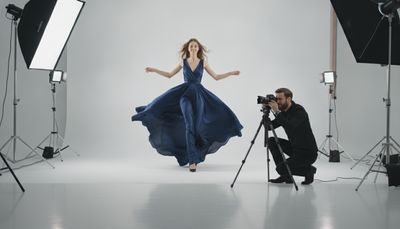
The photographer sets the camera to 1/8000 of a second and you jump. In the image: every water droplet on your hair is sharp, every fold of fabric frozen. Then he switches to 1/30 of a second and you turn gracefully, the dress becoming a flowing veil. The exposure time in model photography decides whether you look static or dynamic, whether the image radiates energy or shows control. Many models don't know how much this one technical parameter affects their image and why the photographer suddenly asks for different movements from you.
As a model, you don't have to set the exposure time yourself, but you should understand what's happening. When the photographer says "move faster" or "hold the position longer," it often has to do with the chosen shutter speed. This knowledge makes you a better communication partner on set and helps you control your movements more precisely. According to a 2023 survey by the Federal Association of Professional Image Providers (BVPA), 67% of photographers say that models with a basic technical understanding work more efficiently and need fewer takes.
What Exposure Time Actually Controls
Exposure time, often also called shutter speed, indicates how long the camera's sensor is exposed to light. It is measured in fractions of a second: 1/1000 means one thousandth of a second, 1/60 one sixtieth. The shorter the time, the less motion is visible in the image. In dynamic model photos, exposure time is the deciding factor in whether your movement is rendered sharp or as artistic blur.
In fashion photography, professionals often work with values between 1/125 and 1/500 of a second for normal runway shots. Jumps or action shots require at least 1/1000 of a second, often even 1/2000 or faster. A 2022 study by the German Society for Photography (DGPh) shows that at shutter speeds below 1/250 of a second, 43% of motion detail in fast arm movements is already lost. That can be intentional or a technical error, depending on the creative intent.
Exposure time also affects how the light looks. Shorter times require more light or a wider aperture so the image doesn't turn out too dark. That's why you often see powerful flash systems or continuous lighting on set when the photographer wants to freeze motion. If you understand how lighting setups and technical parameters work together, you can better judge why some movements work and others don't.
Freeze Effect: Capturing Motion Razor Sharp
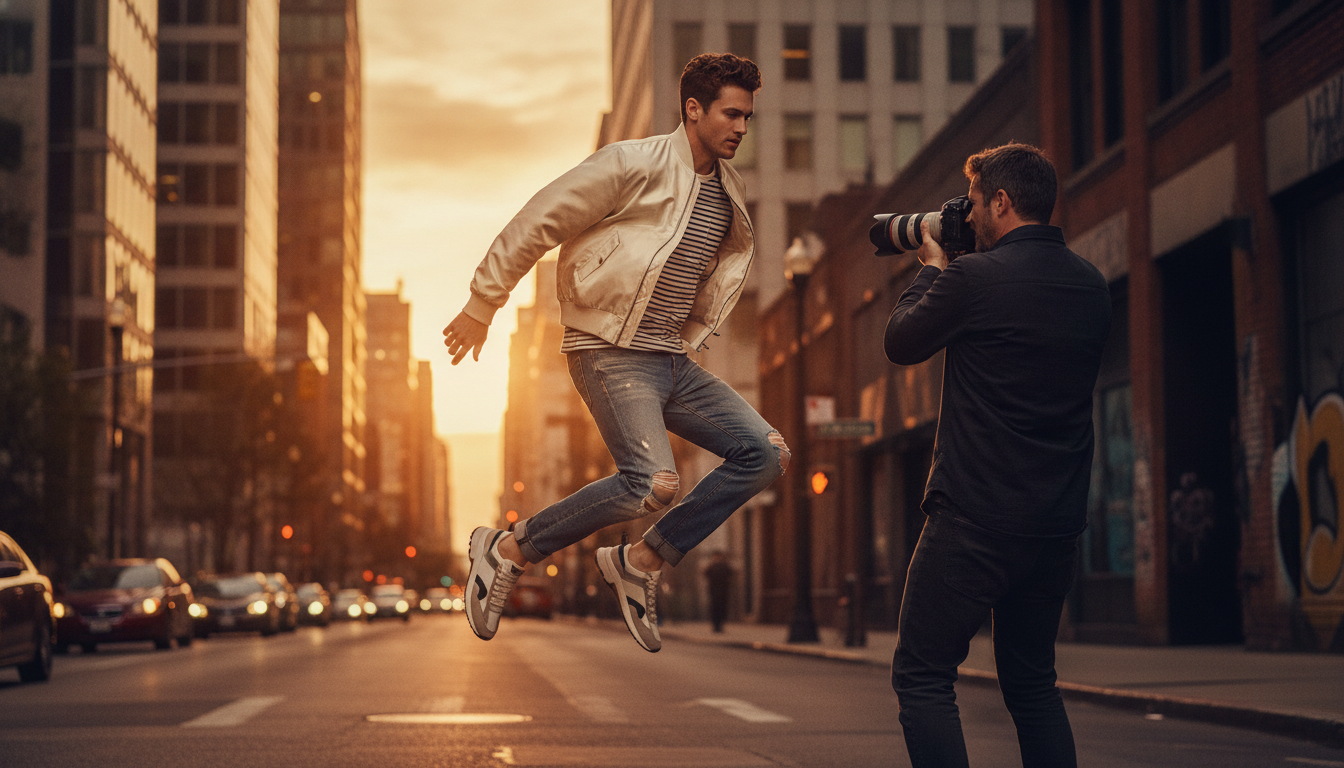
You jump, throw your hair back, turn in mid-air. The photographer captures the moment at 1/2000 of a second and every detail is in place. This freeze effect is extremely popular in commercial fashion photography because it shows energy and perfection at the same time. Brands like Adidas and Nike use this look for sportswear campaigns, and H&M and Zara for dynamic lookbook images.
What exposure time is needed for jumping models depends on the speed. A gentle jump with little height often gets by with 1/500 to 1/1000 of a second. For high jumps, fast turns, or when hair and fabrics fly along, you need at least 1/1250, better 1/2000 of a second or shorter. In an interview with the British Journal of Photography (2023), photographer Rankin describes regularly using 1/4000 of a second for his well-known jump shots with models to guarantee zero blur even with strong movement.
Typical Freeze Situations in a Model's Everyday Work
- Runway shots during the turn at the end of the catwalk (1/500 to 1/1000 of a second)
- Jump and action shots for sportswear or lifestyle campaigns (1/2000 to 1/8000 of a second)
- Hair flips and movements with flowing fabrics that should look razor sharp (1/1000 to 1/2000 of a second)
- Martial arts or dance poses in motion for athletic wear (1/2000 of a second and faster)
When the photographer works with very short exposure times, you don't have to adjust your movement; quite the opposite: you can act more explosively, faster, more expressively. The technical apparatus captures you. The only important thing is that you execute the movement cleanly, because every untidy line and every slack muscle becomes mercilessly visible. The freeze technique demands physical control and strength, especially over multiple takes.
Using Motion Blur Creatively in a Fashion Shoot
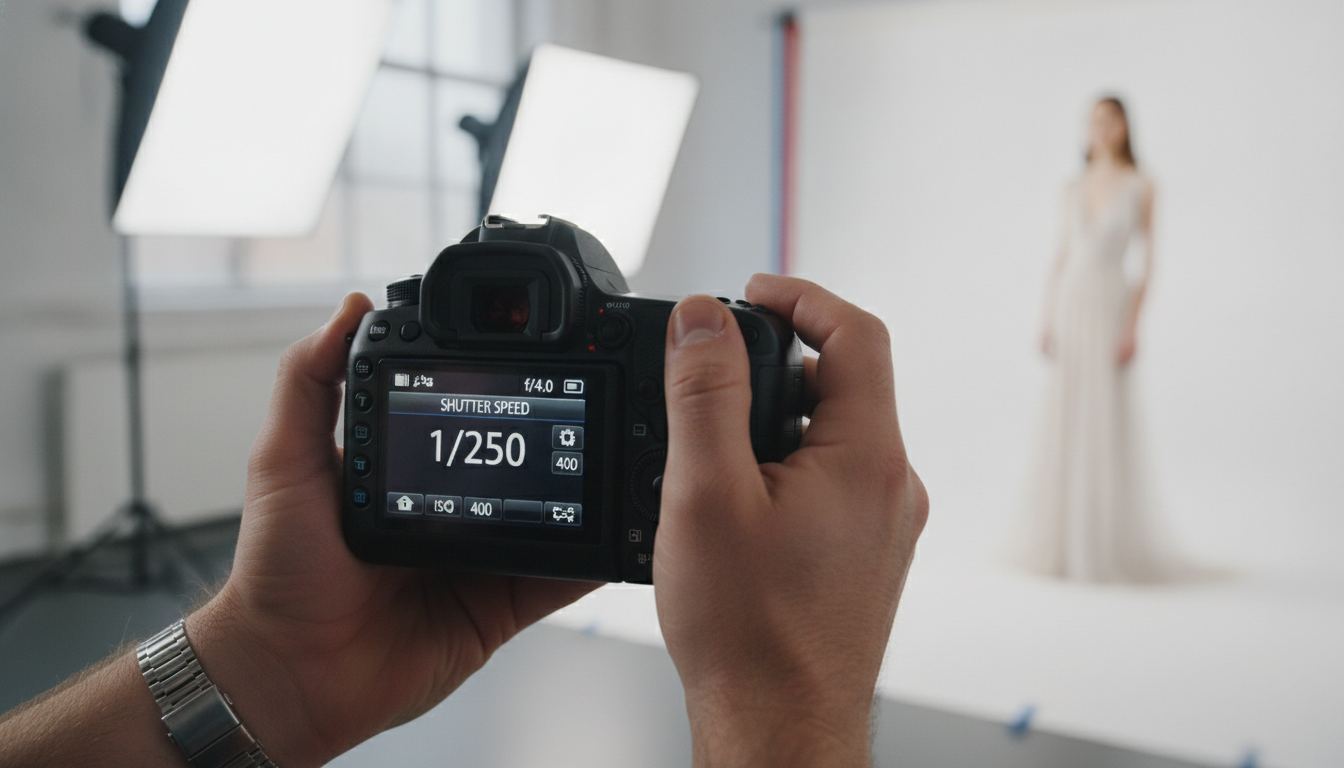
Not every image wants to freeze. Motion blur photography creates dynamics, emotion, and an artistic layer that often conveys more feeling than a perfectly sharp image. When the photographer goes to 1/30 or 1/15 of a second while you walk or turn, a smear effect appears that shows you in motion. Magazines like Vogue or i-D use this technique for editorial spreads that sell mood instead of product details.
Using motion blur creatively in a fashion shoot means, for you as a model: move more slowly and fluidly. If you run too fast at 1/30 of a second, the entire image becomes blurry and chaotic. Controlled, even movements work better. In his last works before his death in 2019, photographer Peter Lindbergh often worked with long exposure times between 1/15 and 1/60 of a second to show models in fluid motion, as he explained in a conversation with The Guardian.
The challenge: often the photographer wants only parts of the image blurred, such as the dress or the hair, while your face stays sharp. Then you have to keep your head still and move only your body. That takes body control and practice. At shutter speeds around 1/60 of a second, even a small head movement is enough to blur your face. If you notice at a shoot that the photographer is using longer exposure times, ask which body parts should stay sharp.
Practical Tips for Motion Blur
Work together with the photographer. Ask about the shutter speed if you're unsure. Values around 1/60 or longer usually mean you should act more slowly and in a more controlled way. At 1/125 to 1/250 of a second you have more freedom, but fast movements can still blur slightly. Test a few movement sequences before the actual shoot and look at the results on the camera display. That gives you a feeling for how much speed is allowed.
Especially with certain camera angles and directions of movement, blur has different strengths. A movement toward the camera creates less blur than a sideways movement, because the relative speed in the image is smaller. So when you turn or walk sideways, you need more control at the same shutter speed than with a movement forward or backward.
Setting Shutter Speed for Runway Shots
The runway is a special situation. You move constantly forward, turn at the end, and walk back. Photographers at the runway usually work with 1/250 to 1/500 of a second, a compromise between sharpness and light requirements. At Mercedes-Benz Fashion Week Berlin 2023, according to the official photographer crew, over 80% of the professionals used shutter speeds between 1/320 and 1/500 of a second to capture both the movement and the details of the clothing.
Your job is to walk evenly. Jerky movements or sudden changes of pace create unwanted blur at these medium exposure times. The turn at the end of the catwalk is critical: if you turn too fast, your face becomes blurry. Practice slow, controlled turns. Many experienced runway models pause briefly after the turn before walking back to give the photographer a chance at a sharp image.
At shows with a special lighting concept, photographers may have to work with longer exposure times, such as 1/125 or 1/60 of a second. Then every movement becomes critical. Pay attention to the photographers' position: they often stand at the end of the runway, exactly where you turn. If you notice that flashes only fire occasionally and a lot of continuous light is used, assume longer exposure times and move more deliberately.
How Exposure Time Affects a Model's Look
A frozen image at 1/2000 of a second shows you powerful, controlled, at the peak of the movement. It often looks athletic, energetic, confident. An image with motion blur at 1/30 of a second creates softness, flow, sometimes also melancholy or dreaminess. Exposure time therefore decides not only about sharpness but about the emotional message of the image.
For your portfolio, you should have both kinds of images. Freeze shots show that you can work dynamically, which matters for sports, fitness, or action campaigns. Images with motion blur show artistic understanding and suit editorial work or high-fashion applications. When you update your comp card and swap out photos, make sure the balance is right and both styles are represented.
The effect on clients is measurable. A 2022 internal study by the agency IMG Models showed that at castings for sportswear campaigns, 73% of clients preferred portfolio images with a freeze effect, while for high-fashion jobs 61% of clients chose images with motion blur or calm poses. So you should deliberately have different visual languages in your portfolio for different markets.
Technical Limits and What You Can Influence
You don't set the camera, but you can actively help shape the result. If the photographer says the light isn't enough for a short exposure time, you can offer to move closer to the window or the light source. More light means the photographer can use shorter shutter speeds and still get a correctly exposed image. This is especially relevant at TFP shoots or smaller productions, where studio strobes aren't always available.
The other way around: if the photographer deliberately works with little light and a long exposure time to create a certain mood, ask about the intention. If you know he wants a dreamy, flowing look, you can adjust your movements accordingly. Communication is the key. A "How fast should I move?" or "Should my face stay sharp?" shows professionalism and helps both sides work more efficiently.
There are always limits. Even with strong flashes, extremely short exposure times (1/8000 of a second) can't always be used, because many flashes don't sync with all shutter speeds. This is where the so-called flash sync speed comes in, usually 1/200 or 1/250 of a second at most. If the photographer still wants to freeze motion, he uses special high-speed-sync flashes or available light with an open aperture. For you that means: sometimes not everything is technically possible, but a good photographer finds solutions.
FAQ: Exposure Time in a Model Shoot
What exposure time is ideal for jumping models?
For jumping models, professionals recommend at least 1/1000 of a second, better 1/2000 to 1/4000 of a second. These values freeze the movement completely and show every detail sharp. For lower jumps or gentler movements, 1/500 of a second can also be enough, but as soon as hair and clothing are in strong motion, you need faster shutter speeds.
How can I tell as a model whether the photographer is working with a short or long exposure time?
Pay attention to the flash behavior and the photographer's instructions. Many rapid flashes or very bright continuous light point to short exposure times. If the photographer says "move more slowly" or "keep your head still," he is probably working with longer shutter speeds. When in doubt: just ask, which shows interest and professionalism.
Why do some images turn out sharp despite movement, while others don't?
Exposure time is the main factor. Short shutter speeds (1/500 of a second and faster) freeze motion, long times (1/60 of a second and longer) create blur. The direction of movement also plays a role: movements toward the camera look sharper than sideways movements at the same shutter speed. The photographer chooses the setting depending on the desired look.
Do I need technical knowledge about exposure time as a model?
You don't have to be able to operate a camera, but a basic understanding helps enormously. If you know that short exposure times freeze motion and long times create blur, you can adjust your movements better on set. That saves time, reduces the number of takes, and shows professionalism. Many photographers appreciate models who think along.
Can I influence which exposure time is used?
Indirectly, yes. If you move closer to light sources, you enable the photographer to use shorter exposure times. If you act more slowly and in a more controlled way, he can also work with longer shutter speeds without everything blurring. You can also actively ask questions and make suggestions, which shows initiative and improves collaboration on set.
Conclusion: Understanding Exposure Time Makes You a Better Model
The exposure time in model photography is not an abstract camera detail but a tool that fundamentally controls how your image comes across. Whether you are frozen or flowing, whether you look powerful or dreamy, depends on this one parameter. You don't have to set it yourself, but if you understand what's happening, you can control your movements more precisely and actively contribute to the image idea.
Use this knowledge at your next shoot. Ask the photographer about the shutter speed if you're unsure. Offer to act faster or slower, move closer to the light, or hold a pose longer. These small adjustments make the difference between an average and an outstanding model. The camera is just a tool; you are the creative part who brings the image idea to life.