Visas for Model Jobs: The Rules for Working Abroad

Reading time: 11 minutes
A shoot in New York, a fashion week in Milan, a commercial in Dubai: working abroad as a model sounds glamorous, until you're standing at the airport and the border officer asks for your work visa. Without the right visa for modeling jobs, you risk not only deportation but also years-long entry bans and the end of your international career. The visa rules for models are complex, vary drastically from country to country and get underestimated until it's too late.
According to a survey by the German Federal Ministry of the Interior and Community, around 18,700 people were caught working illegally in Germany in 2023, including creative professionals without a proper work visa. In the US, the refusal rate for B1/B2 visas (often wrongly used for modeling jobs) is around 13 percent, and for O-1 visas for people of extraordinary ability it is even higher. The consequences: missed jobs, lost bookings and damage to your reputation with agencies.
Why Isn't a Tourist Visa Usually Enough for Models?
Many new models think a tourist visa is enough for a one-off shoot abroad. That's a mistake that can get expensive. A tourist visa allows tourist activities, but not employment, not even for a few hours in front of the camera. As soon as you earn money or perform a paid service in a country, you need a work visa for models.
In practical terms: you can't shoot a campaign in Paris on a Schengen tourist visa, even if the fee is only transferred to your bank account at home later. What matters is where the work is performed, not how the payment flows. The European Commission makes clear that "any activity that results in remuneration" counts as employment (source: European Commission – Visa Policy).
The exception: unpaid TFP shoots (Time for Print). There is a gray area here, but even then you should be able to prove in writing that no fee changes hands. For professional assignments the rule is: no visa, no job.
Which Visa Types Exist for International Modeling Assignments?
The visa landscape is inconsistent. Every country has its own categories, application procedures and processing times. Here are the most important visa types for models:
USA: O-1 Visa and P-1 Visa for Models
In the US, the O-1 visa is the most common work visa for models with extraordinary abilities. It requires you to show proven achievements: features in major magazines like Vogue or Harper's Bazaar, campaigns for international brands, award nominations or agency contracts with well-known houses such as IMG Models or Elite Model Management. Regular processing takes 2 to 3 months; with a premium fee of 2,805 US dollars (as of 2024), that drops to 15 business days.
The P-1 visa applies to members of an internationally recognized group, such as models in a permanent fashion show ensemble. It is less relevant for individual modeling jobs. Both visas require a US sponsor, typically the booking agency or the client (source: U.S. Citizenship and Immigration Services – O-1 Visa).
Important: a B1/B2 visa (business/tourist) is illegal for paid modeling jobs, even if some agencies suggest otherwise. Anyone caught risks an entry ban of 3 to 10 years.
United Kingdom: Tier 5 Creative and Sporting Visa
Since Brexit, stricter rules apply to EU citizens. For modeling jobs of up to 12 months you need a Tier 5 (Temporary Worker – Creative and Sporting) visa. The requirement is a Certificate of Sponsorship (CoS) from a licensed UK sponsor, meaning a British agency or production company.
The fee is 259 GBP for up to 12 months, plus the Immigration Health Surcharge of 624 GBP per year. Processing takes about 3 weeks. No CoS, no visa; no visa, no legal work (source: UK Government – Apply for a Temporary Work – Creative Worker visa).
Schengen Area: Work Permits for Non-EU Nationals
Within the EU, EU citizens may work without a visa, but nationals of non-EU countries need a work permit. The visa requirements for models differ by destination country: in Germany, "employment without a permit" under § 15a AufenthG is possible for short-term jobs, such as international trade fairs or fashion weeks of up to 90 days. Longer jobs require a residence permit.
In France, the "autorisation provisoire de travail" (APT) applies; in Italy, the "nulla osta al lavoro". Applications are usually made through the booking agency or the local employer. Processing times: 4 to 8 weeks.
Dubai and the UAE: Artist Permit
Dubai is a growing market for models, but requires an Artist Permit for every paid appearance. It is applied for by the client through the Dubai Department of Economic Development and costs about 500 to 1,000 AED (roughly $135 to $270). Without a permit you face heavy fines (up to 50,000 AED) and deportation. Processing time: 3 to 5 business days if all documents are complete.
Common Pitfalls with Visas for Model Jobs
Practice shows that many models trip over avoidable mistakes. Here are the three most common stumbling blocks:
- Applying too late: An O-1 visa for the US needs at least 3 months' lead time. If you only start 4 weeks before the job, you're too late, even with premium processing.
- Incomplete documents: Missing portfolio evidence, unclear sponsorship letters or incorrectly completed forms lead to refusals. For an O-1 visa you must meet at least 3 of the 8 USCIS criteria, such as press articles, testimonials or significant contracts.
- Lack of agency backing: Not every agency covers the visa costs or the administrative work. Clarify who covers what before signing a contract. If you want to know more about how to review model contracts properly, you'll find a detailed checklist there.
Step by Step: How to Apply for Your Work Visa as a Model

A structured application process saves time and nerves. Here is the typical process, using the US (O-1 visa) as an example:
First: get a client or agency to act as your sponsor. Without a US sponsor there is no O-1 visa. This can be the booking agency, a photographer or a production company. The sponsor files the petition with USCIS.
Second: gather evidence. You need your portfolio, press clippings (print or online), contracts with renowned agencies such as Louisa Models in Munich or VIVA Models in Berlin, letters of recommendation from photographers or clients, award nominations and appearances at major fashion weeks (Berlin Fashion Week, Paris Fashion Week).
Third: have Form I-129 completed. The sponsor fills out the form and submits it to USCIS together with all the evidence. Cost: a base fee of 460 US dollars, optionally 2,805 US dollars for premium processing.
Fourth: wait for the approval notice. With regular processing this takes 2 to 3 months, with premium processing 15 business days. After that you receive the I-797 Approval Notice.
Fifth: visa interview at the US embassy. With the I-797 you book an appointment at a US embassy or consulate, for example in Frankfurt or Munich. The interview takes place there, biometric data is collected, and after a few days you get your passport back with the visa.
Legal Protection: What to Do If You Have Visa Problems
What happens if your visa is refused or you're caught without the correct visa? The consequences are drastic. A refusal doesn't automatically mean the end, but every further application gets harder. Reasons for refusals are usually insufficient evidence or missing sponsorship documents.
If you're refused, you have two options: either you file a new, improved application (with more complete documents) or you file an appeal. An appeal rarely succeeds for O-1 visas, since the criteria are clearly defined. Better: bring in a lawyer who specializes in immigration law. Cost: from $2,000 upward.
Anyone who works without a visa and gets caught faces fines, deportation and multi-year entry bans. In the US, illegal work leads to an automatic entry ban of 3 years (for stays of under 180 days) or 10 years (for stays of over 180 days). In Germany, fines of up to €500,000 under § 404 SGB III threaten for illegal employment.
As a precaution, you should back up all contracts, booking confirmations and visa documents digitally (for example in the cloud) and have them at hand at every border crossing. When in doubt, the rule is: better to turn down a job than to travel without a visa.
Visa Requirements by Region: An Overview
Traveling as a model means dealing with very different legal systems. Here is an overview by region:
Asia: China, Japan, South Korea
China requires a Z visa (work visa) for all paid modeling jobs. The process is bureaucratic, takes 4 to 6 weeks and requires an invitation from a Chinese company as well as a work permit from the local labor office. Japan uses the Entertainer visa (Status of Residence: Entertainer), which is applied for through a Japanese sponsor, with processing taking about 1 to 3 months. South Korea issues the E-6 visa (Arts and Entertainment), also sponsor-based, with processing of 2 to 4 weeks.
Latin America: Brazil, Mexico
Brazil requires the VITEM V visa (temporary work visa) for models. The application is made through the Brazilian embassy, processing takes about 4 weeks and the cost is around $110. Mexico is somewhat more flexible: for jobs under 180 days, a Visitor Permit with Permission to Perform Remunerative Activities is often enough, and it can be applied for directly on arrival at the airport.
Australia and New Zealand
Australia uses the Subclass 408 Temporary Activity visa (Entertainment stream) for models. A requirement is an Australian sponsor; processing takes 1 to 2 months and the cost is 325 AUD. New Zealand issues the Specific Purpose Work Visa, with processing of about 3 weeks.
Costs and Timing: What You Need to Plan For
The financial and time costs of visas vary considerably. Here is an overview of realistic costs and processing times (as of 2024):
US O-1 visa: 460 USD (base fee) + 2,805 USD (premium processing, optional) + legal fees (2,000 to 5,000 USD), processing time 2 to 3 months regular, 15 business days with premium processing. UK Tier 5 visa: 259 GBP (visa) + 624 GBP (health surcharge) = 883 GBP, processing time about 3 weeks. Dubai Artist Permit: 500 to 1,000 AED (roughly $135 to $270), processing time 3 to 5 business days. China Z visa: about $160 (visa) + translation costs + agency fees (a total of $430 to $650), processing time 4 to 6 weeks.
On top of that come costs for translations, certified documents and postage. Budget at least $550 to $1,100 per visa, and considerably more for the US.
What Role Does the Agency Play in the Visa Process?
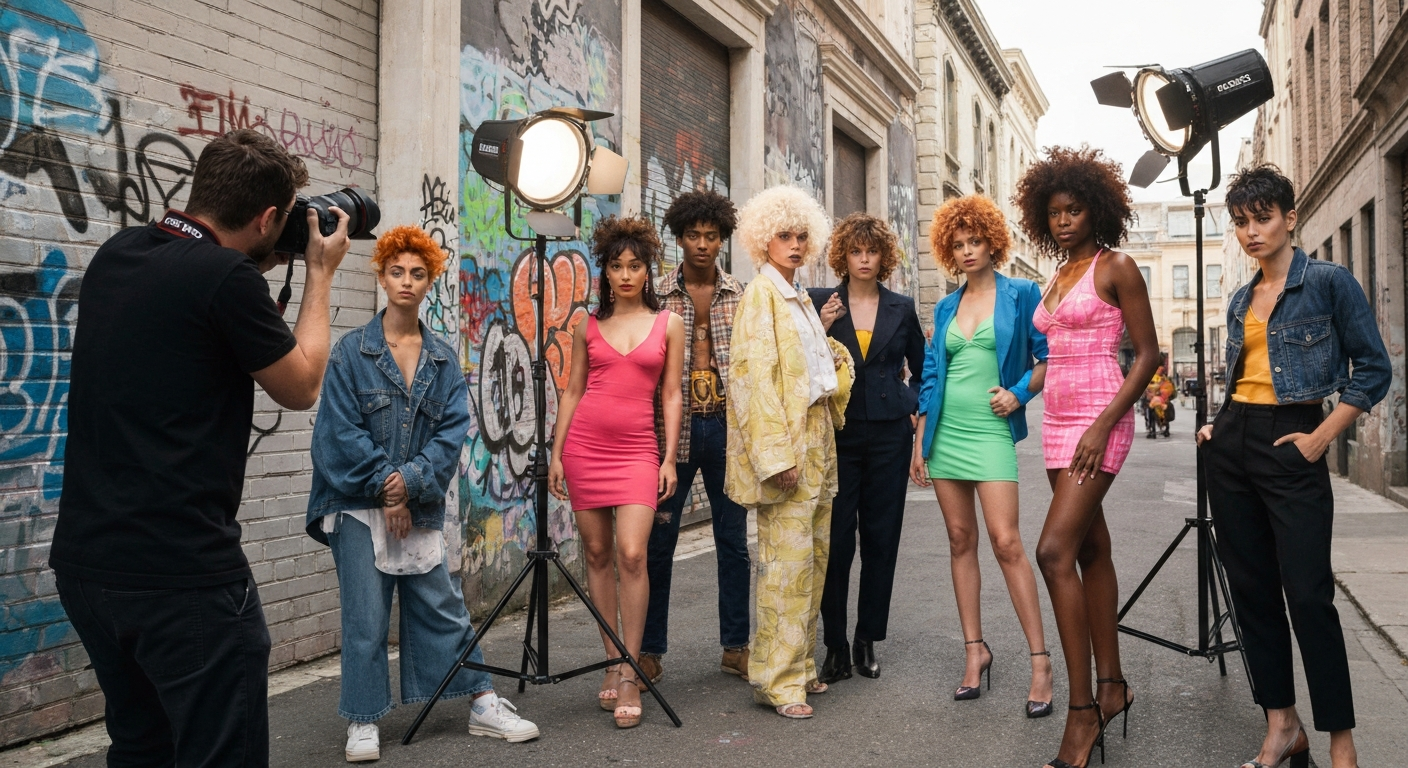
A reputable modeling agency actively supports you in the visa process, especially for international assignments. Top agencies such as Louisa Models, VIVA Models or Model Management Hamburg have experience with visa applications and often handle coordination with foreign partner agencies.
What you can expect from your agency: it issues letters of recommendation, arranges sponsorship letters from foreign clients, advises on the visa types you need and helps with completing forms. Some agencies have their own legal departments or work with specialized lawyers.
What the agency usually doesn't take on: the full visa costs (except for very high-paying jobs) and the personal filing of the application (you have to attend embassy appointments yourself). Clarify which services are included before signing a contract. If you want to dive deeper into contract details, read our article on exclusive contracts with modeling agencies.
How Do I Prepare Best for the Visa Interview?
Many visa processes end with a personal interview at the embassy or consulate. This applies mainly to US visas, but also to UK, China and Japan visas. Preparation often decides between success and refusal.
Bring all documents in paper form: passport, I-797 Approval Notice (for the O-1 visa), invitation letter, employment contract, portfolio (print or tablet), proof of previous jobs (tearsheets, clippings), bank statements as proof of financial stability and a return ticket or itinerary.
Dress professionally, but not overdressed. Business casual is ideal. Be on time; security checks at embassies often take 30 minutes. Answer all questions clearly and honestly, without rambling explanations. Typical questions are: Why are you traveling to the US? Who is your client? How long will you stay? Do you have family or property in your home country? (proof of your intention to return).
Avoid contradicting what you wrote in your application. If you stated on the form that you'd stay 3 months, say so in the interview too. Lies lead to immediate refusal and multi-year bans.
Frequently Asked Questions About Visas for Model Jobs
Which visa do I need as a model abroad?
That depends on the destination country and the length of the job. For the US you need an O-1 visa for extraordinary abilities, for the UK a Tier 5 Creative Worker visa, for Dubai an Artist Permit. Tourist visas are never enough for paid modeling jobs. Always check the specific requirements of the destination country at least 3 months before the job starts.
Can I work as a model in the EU without a visa as an EU citizen?
Yes, free movement of workers applies within the EU. You may work in any EU country without a visa, but for longer stays (over 3 months) you must register and may need to apply for a tax number. Different rules apply to non-EU citizens, who need work permits even within the EU.
What happens if I'm caught without a work visa?
You risk deportation, fines and multi-year entry bans. In the US, illegal work leads to an entry ban of 3 to 10 years, and in Germany fines of up to €500,000 threaten. Your agency can also terminate your contract, and your reputation in the industry suffers massively. The potential job is never worth the risk.
How long does it take to process a work visa for models?
Processing times vary widely: the US O-1 visa takes 2 to 3 months regular or 15 business days with premium processing, the UK Tier 5 visa about 3 weeks, the Dubai Artist Permit 3 to 5 business days, the China Z visa 4 to 6 weeks. Always plan at least 3 months of lead time, especially for complex visas like the O-1.
Does my modeling agency cover the cost of the visa?
That's negotiable and depends on the job. For high-paying international campaigns, the client or agency often covers the visa costs. For smaller jobs you usually have to pay yourself. Clarify this in writing before signing the contract. Some agencies offer to advance the money and deduct it later from your fee.
Conclusion: No International Modeling Career Without the Correct Visa
Anyone who wants to work internationally as a model can't avoid a solid understanding of the visa requirements for the modeling industry. The rules are complex, inconsistent and change regularly. But if you get informed early, proceed in a structured way and use professional support, you avoid expensive mistakes and build a legally secure career.
The three most important takeaways: start your visa research at least 3 months before a job abroad. Clarify with your agency who covers which costs and what support you'll get. Never work without the correct visa; the consequences can be career-ending. If you also want to know how to structure your finances as a model, our article on the small business rule for models is worth a look.
The international modeling world is open to you, but only with the right visa in your pocket. Get informed, plan ahead and protect yourself, and nothing will stand in the way of your career.