Modeling Agency Commission: What Do You Keep of Your Fee?

Reading time: 7 minutes
You landed your first job through an agency, the fee sounds tempting – but then you see the statement. Of the promised $800, only $640 is suddenly left. The modeling agency commission swallowed 20 percent. Is that normal? Absolutely. But there are big differences, and you should know exactly what's standard and where to be careful.
In Germany, the standard commission at most legitimate agencies is between 15 and 25 percent of the gross fee. The trade publication TextilWirtschaft reported in 2023 that established agencies like Louisa Models Munich or Modelwerk Hamburg generally take 20 percent. Newcomer agencies or smaller boutique agencies sometimes charge 15 percent, while international top agencies may well charge 25 percent – but also offer corresponding contacts and job quality.
How Much Commission Does a Modeling Agency Really Take?
The agency commission for models varies by agency type and contract model. With a standard agency contract without exclusivity, you typically pay 20 percent. If you have an exclusive contract with a modeling agency, the commission can range between 15 and 30 percent – depending on what services the agency provides.
According to a 2022 survey by the German Fashion Institute, about 68 percent of German modeling agencies charge a commission between 18 and 22 percent. Only 12 percent charge more than 25 percent; these are mostly specialized in high fashion or international placement. Important: the commission is always calculated on the gross amount, before taxes and social contributions are deducted.
A concrete example: you get a job for an advertising campaign with a fee of $1,200 gross. At a 20 percent agency commission, you're left with $960. Income tax, possibly trade tax and health insurance contributions are then deducted from that. Realistically, about $700 to $750 ends up in your account in the end – depending on your tax rate and insurance status.
What Other Costs Apply Besides the Booking Fee?
The agency booking fee isn't the only item deducted from your fee. Many agencies also charge for portfolio updates, comp card printing or maintenance of your online profile. Legitimate agencies like Cocaine Models Berlin or Seeds Management present these costs transparently in the contract and charge them separately – not hidden in the commission.
Typical additional costs can include:
- Comp card printing: $55 to $165 for 50 to 100 professional cards
- Portfolio shoots: $220 to $880, depending on the photographer and scope
- Profile maintenance on platforms: $0 to $55 per month (some agencies do this for free)
- Travel expense advance: usually deducted from the first fee
Beware of shady providers: if an agency demands high upfront fees for "admission" or "roster listing," that's a warning sign. Legitimate agencies earn money from successful bookings, not from registration fees. Reviewing your model contract is therefore a must before you sign.
What About Taxes and Social Contributions?
Model fee deductions don't end with the agency commission. As a freelance model you have to pay income tax – in Germany the rate ranges between 0 and 42 percent depending on annual income (from about €58,000, or roughly $63,000, in 2024). Many models start with the small business regulation so they don't have to remit VAT.
According to the German Federal Statistical Office, the average gross annual income of freelance models in Germany in 2022 was around €18,400 (about $20,000) – roughly €1,530 gross per month. After deducting agency commission (about 20 percent), health insurance (about €200 to €400, or $220 to $440, per month as a self-employed person) and taxes, often less than the minimum wage is left. That's why a side income from hostess jobs or promotion jobs is the rule, not the exception, for many models.
Is a 20 Percent Agency Commission Too Much?

Whether 20 percent is too much depends on what the agency delivers for it. A good agency doesn't just place jobs, it also offers advice, contract negotiation, legal protection against non-payment and networking with clients. International agencies like Modelwerk or Place Models have direct contacts with magazines like Vogue, brands like Zalando and production companies – that access is worth its weight in gold.
A comparison: if you look for jobs yourself as a freelance model on platforms like Model-Kartei or Instagram, you save the commission – but you also have to negotiate, review contracts and bear the risk of non-payment yourself. According to a 2023 survey by the Federal Association of Model and Fashion Agencies (BMFA), agency-represented models earn on average 35 percent more per year than completely independent models – despite the commission.
It becomes critical when the commission rises above 25 percent without the agency offering corresponding extra services. Or when hidden fees appear on top that aren't clearly named in the contract. Then you should seek a conversation or switch agencies.
What's Left of the Model Fee? A Worked Example
Let's assume you have a good month with three jobs: an editorial shoot for $650, an e-commerce job for $850 and a trade show appearance for $450. That's $1,950 gross. Here's how the calculation looks:
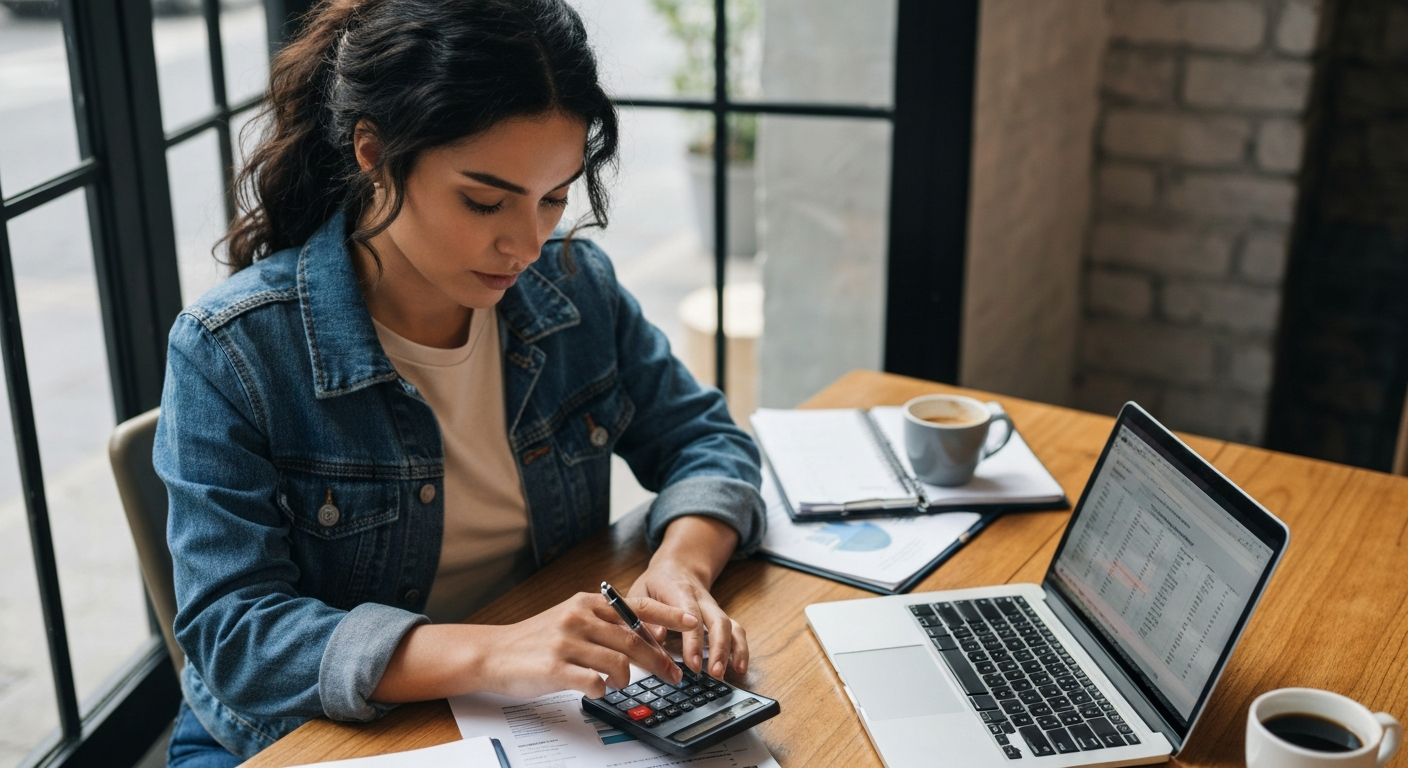
Total gross fee: $1,950. Deduction of agency commission (20 percent): $390. Remaining: $1,560. Still to be deducted: health insurance about $385, income tax (estimated at 10 percent for a low annual income): $156. So you keep a net of roughly $1,019 – a good half of the original gross fee.
If you also factor in travel costs, meals on longer shoots or investments in your portfolio, the model's net earnings shrink further. That's why it's important to keep an eye on your finances and to accept even smaller jobs only if they are really worthwhile after deductions. A well-calculated travel budget as a model helps you avoid losing money on international jobs.
How Do You Negotiate Agency Costs?
In most cases, the agency cost arrangement for models is not negotiable – at least not for newcomers. Established models with a strong bargaining position can sometimes negotiate a reduced commission, especially if they already bring their own client relationships or have a large social media reach.
What you can certainly bring up: transparency on additional costs, fair payout cycles (some agencies only pay 60 days after the job ends) and clear rules for international jobs. If, for example, the agency brings in a French partner agency for a job in Paris that also takes a commission, that should be clearly communicated beforehand.
My tip: when signing the contract, explicitly ask for the net payout on a hypothetical $1,000 job. If the agency can't name a clear number right away or answers evasively, that's a bad sign. Legitimate agencies will work it out for you transparently.
Is an Agency Worth It Despite the Commission?
For most models: yes. A good agency opens doors you can't open on your own. It negotiates higher fees, provides legal protection and places jobs you would never get on your own. According to the industry portal FashionUnited, models with agency representation earn on average 40 percent more in their first two years than models without an agency – even after deducting the commission.
What matters is that you choose the right agency and clarify the costs transparently from the start. A well-prepared go-see helps you ask the right questions at first contact and get a feel for the agency.
Frequently Asked Questions About Modeling Agency Commission
What does a modeling agency earn from models?
A modeling agency earns through the booking fee it withholds from the model's gross fee. With a 20 percent commission and a monthly fee of $5,500 (spread across several jobs), the agency earns $1,100 per model. Successful agencies with 20 to 50 active models thus reach monthly revenues in the five- to six-figure range.
What commission is normal at modeling agencies?
15 to 25 percent of the gross fee is normal. According to industry reports, the average in Germany is about 20 percent. International top agencies tend to take 25 percent, smaller or regional agencies sometimes only 15 percent. Anything above 25 percent you should question critically.
How much of the model fee is left after all deductions?
After agency commission (about 20 percent), taxes (10 to 20 percent for beginners) and health insurance, you keep roughly 50 to 60 percent of the gross fee. On $1,000 gross, that realistically means $500 to $600 net. The higher your annual income, the higher the tax rate and the lower the net share.
Can I deduct the agency commission from my taxes?
No, the commission is already deducted from the gross amount before you pay tax on your income. So you only pay tax on the amount left after the agency commission is deducted. The commission itself is thus already "automatically" tax-reducing, because it reduces your taxable income.
What happens if the agency doesn't get paid for the job?
Legitimate agencies are liable to their models for the fee, even if the client doesn't pay. This should be clearly regulated in the contract. The agency then has to take care of collection itself. At shady agencies this clause is missing – then you're stuck with the loss. That's also why the agency commission is worth it: it buys you security.
Conclusion: Transparency Beats Bargains
The modeling agency commission isn't a rip-off tool, but payment for placement, advice and protection. What matters isn't whether you pay 15 or 20 percent, but what you get for it. An agency that places high-quality jobs, negotiates fair contracts and bills transparently is worth every dollar of commission. An agency that surprises you with hidden costs and only places low-budget jobs is too expensive even at 10 percent. Before every contract signing, work out exactly what is left net – and don't hesitate to ask if something is unclear to you. Your success begins with your understanding of the numbers behind the fee.